Search options: separate word search acrossElements
F
r
a
n
c
i
s
c
o
L
o
y
d
a
3
T
a
l
e
s
5
2
9
6
25
5
21
3
13
7
29
4
17
8
33
Forgetful Frida
Mr. Frick is Very Sick
Casey’s Carrot Cake
Robert and the Robot
What Did the Dinosaur Do?
What Animal Can I Be?
Tidy Town’s Thief
Marvin’s Tree
3
three
Reading stories is a fundamental part of children’s lives. Through
literature, children are able to explore and understand the world
around them. Not only does reading help them acquire phonemic
awareness, but it also expands their vocabulary and enhances their
knowledge of how language works.
Exposing children to stories is one of the best ways to stimulate their
imagination, memory, language and cognitive skills, and helps to
prepare them to understand the written word. Reading to a child
also creates a bond between the listener and the reader, giving both
of them a chance to discuss the story and topics related to that
story. Furthermore, early reading helps preschoolers develop logical
thinking, as they have to judge characters and situations, recognize
cause and effect and identify the sequence of events in a story.
The Reading Cycle
The reading cycle comprises three stages: pre-reading, while reading
and post-reading.
Pre-reading activities prepare children for reading by activating
their prior knowledge about the topic featured in the story. They also
establish a reason to read the story and help review or teach new
vocabulary. Through these activities, teachers help students activate
their background knowledge and provide the necessary information
to make the story clear and appealing.
While reading activities help check children’s comprehension as
they read, by making them identify the characters and the main or
specic ideas or events in the story. They provide children with the
opportunity to ask questions, revise predictions and create mental
images of the characters and events.
Post-reading is the stage that gives children the chance to build up
on their knowledge of the world, as they add new concepts to the
existing ones through reading. Besides this, it also provides them with
the opportunity to relate the text to their own experiences, the world
and other texts that they may have read.
Involving students in activities that allow them to complete the
reading cycle serves two purposes: on the one hand, it will help their
understanding and enjoyment of the story. On the other, it will help
them become familiar with the reading strategies that they will use in
the following school years.
I
n
t
r
o
d
u
c
t
i
o
n

4
four
I
n
t
r
o
d
u
c
t
i
o
n
Cricket Tales
Cricket Tales is a series of three books with fun reading activities
related to each of the stories from Crickets, Richmond’s preschool
series. The activities have been carefully designed to foster children’s
reading comprehension skills and to help them link the characters
and events to their own experiences.
There are two illustrated activities per story aimed at developing
pre-reading and post-reading strategies. The teacher will nd detailed
instructions for those activities in the Instructions pages. A while
reading activity per story is also included so that the reading cycle is
complete. While reading activities appear below the instructions for
the pre-reading activities.
Students can use the pre-reading and post-reading activity
handouts in class, or they can take them home to start working
with the story and round up their response to it. The while reading
activities, designed to have students actively involved in the reading
of the story, can be used in class to clarify or consolidate information
to make reading a more enjoyable and satisfying experience that is
shared between the teacher and the class.
The Teacher’s Resource CD includes extra pre-reading, while reading
and post-reading activities that you can use depending on the
needs of your students or the amount of class time available.
U
n
i
t
5
P
r
e
-
r
e
a
d
i
n
g
F
o
r
g
e
t
f
u
l
F
r
i
d
a
ve
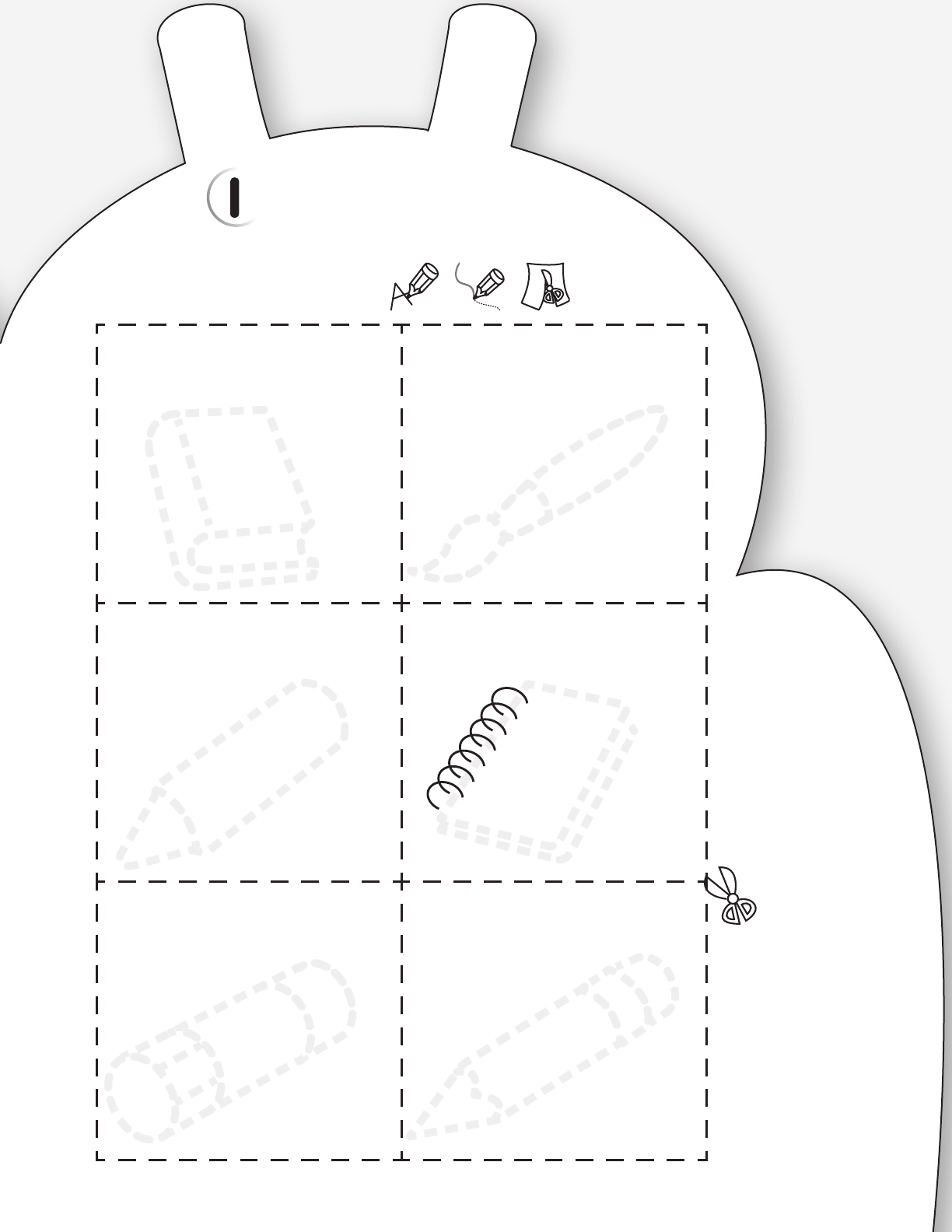
Write and trace. Cut.
book
crayon
glue stick
paintbrush
notebook
pencil
6
Unit 1
I
n
s
t
r
u
c
t
i
o
n
s
six
Forgetful Frida
Pre-reading
Materials: crayons, scissors, Class CD, Story Cards Unit 1
Instructions:
Show Story Card Scene 1 and point to the character and the setting.
Introduce them. Say She is Frida. Where is Frida going? Encourage
students to say She’s going to school. Then call students’ attention
to the pictures on page 5. Tell them they are the school objects Frida
uses. Ask students to write the words and trace them. Next, have
them color the objects and then cut out the cards. Encourage them
to say in which classes they use those objects; for example, We use
a crayon in art class. Finally, ask students to check when Frida uses
those objects as they listen to the story (Track 11). Keep students’
work in their portfolios.
While Reading
Materials: Class CD, cards from the Pre-reading activity
Instructions:
Play Track 11 again and have students follow the story in their
Student’s Books. Play the track once more and ask students What
does Frida forget on Monday? Help them answer She forgets her
paintbrush. Encourage them to hold up the corresponding card. Ask
about the other two days What does she forget on Tuesday? What
does she forget on Wednesday? Help students answer and show the
corresponding cards.
U
n
i
t
7
1
seven
F
o
r
g
e
t
f
u
l
F
r
i
d
a
P
o
s
t
-
r
e
a
d
i
n
g
Look and color. Say.
8
Unit 1
I
n
s
t
r
u
c
t
i
o
n
s
Forgetful Frida
Post-reading
Materials: crayons, Story Cards Unit 1
Instructions:
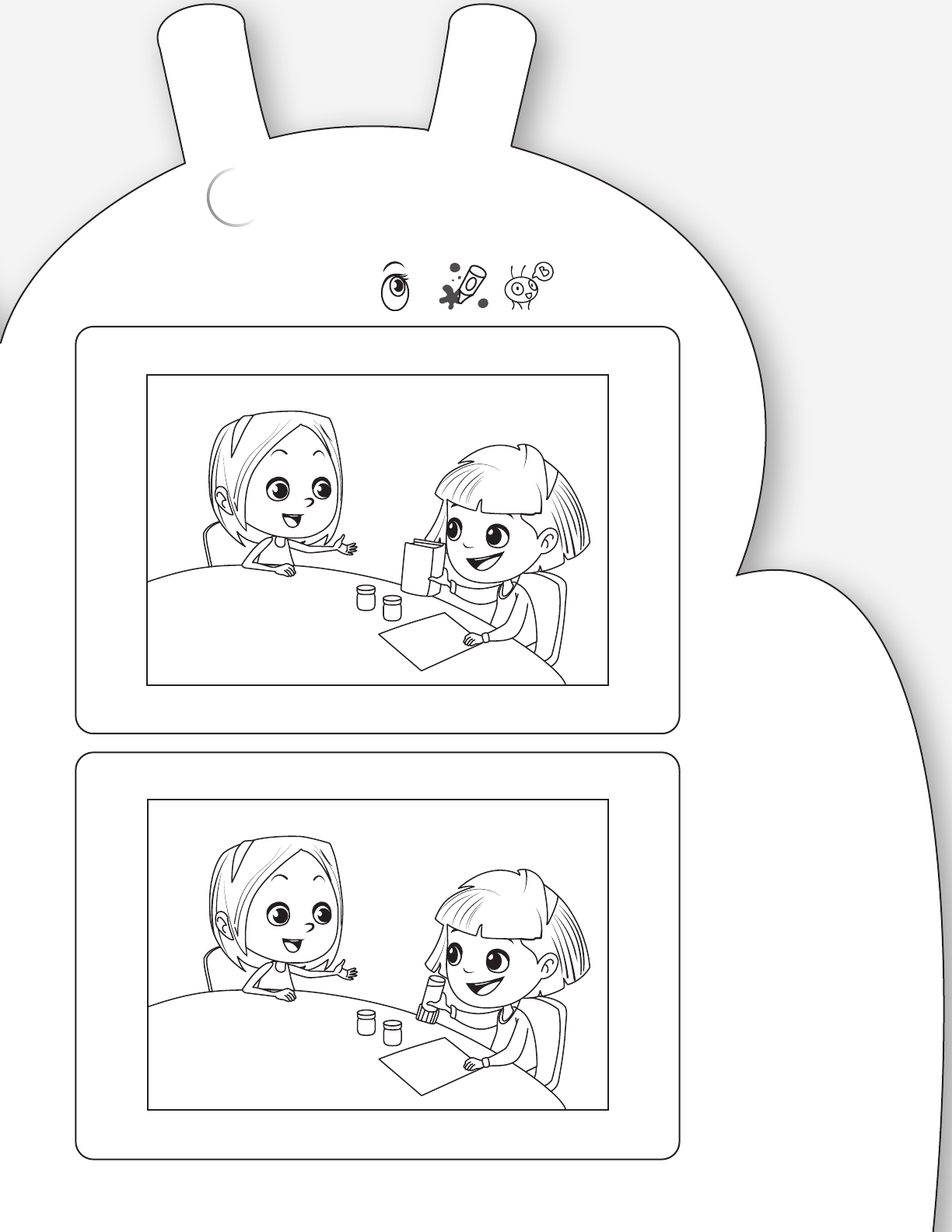
Show students the Story Cards and encourage them to retell
the story. Then ask them to color the frames of the picture that
shows the events from the story. If necessary, help students notice
that, in one of the pictures, Frida is not asking for the actual objects
she asks for in the story. Keep students’ work in their portfolios.
See more pre-reading, while reading and post-reading activities on
the Teacher’s Resource CD. Use them depending on the needs of
your class.
eight
U
n
i
t
9
P
r
e
-
r
e
a
d
i
n
g
2
Write and match.
M
r
.
F
r
i
c
k
i
s
V
e
r
y
S
i
c
k
nine
sore throat
headache
stomachache
fever
10
I
n
s
t
r
u
c
t
i
o
n
s
Mr. Frick is Very Sick
Pre-reading
Materials: colored pencils, Class CD, Story Cards Unit 2
Instructions:
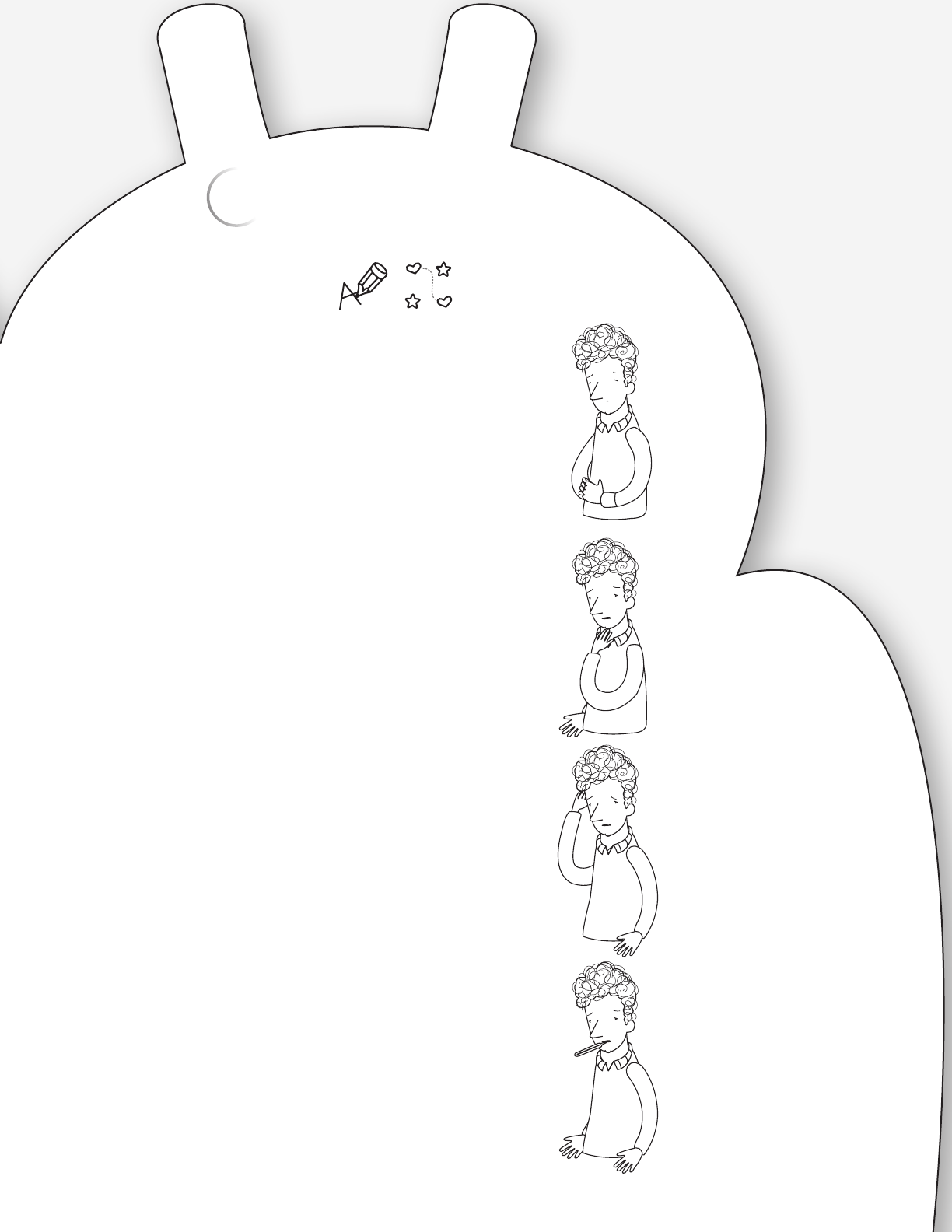
Show Story Card Scene 2, point to the characters and introduce
them. Say She is a doctor. He’s Mr. Frick. What’s the matter with
Mr. Frick? Encourage students to say He’s sick. Then draw their
attention to the pictures on page 9. Tell them the pictures are of
some of the problems people can have as a result of being sick.
Help them name the health problems as they point to the pictures.
Next, have them write and read the words. Encourage them to match
the words with the corresponding pictures. Finally, invite students to
say which health problems they think Mr. Frick has in the story. Ask
What do you think is Mr. Frick’s problem? A sore throat? A headache?
A fever? A stomachache? Have them check their answers as they
listen to the rest of the story (Track 23). Keep students’ work in their
portfolios.
While Reading
Materials: Class CD, Story Cards Unit 2
Preparation: Display Story Cards Unit 2 on the board.
Instructions:
Play Track 23 again and have students follow the story in their
Student’s Books. Play the track once more and have them touch
the corresponding part of the body when a health problem is
mentioned in the story. For example, they have to touch their
forehead when the word fever is mentioned.
Unit 2
ten
U
n
i
t
11
Color and cut. Paste.
P
o
s
t
-
r
e
a
d
i
n
g
M
r
.
F
r
i
c
k
i
s
V
e
r
y
S
i
c
k
2
eleven
12
I
n
s
t
r
u
c
t
i
o
n
s
Mr. Frick is Very Sick
Post-reading
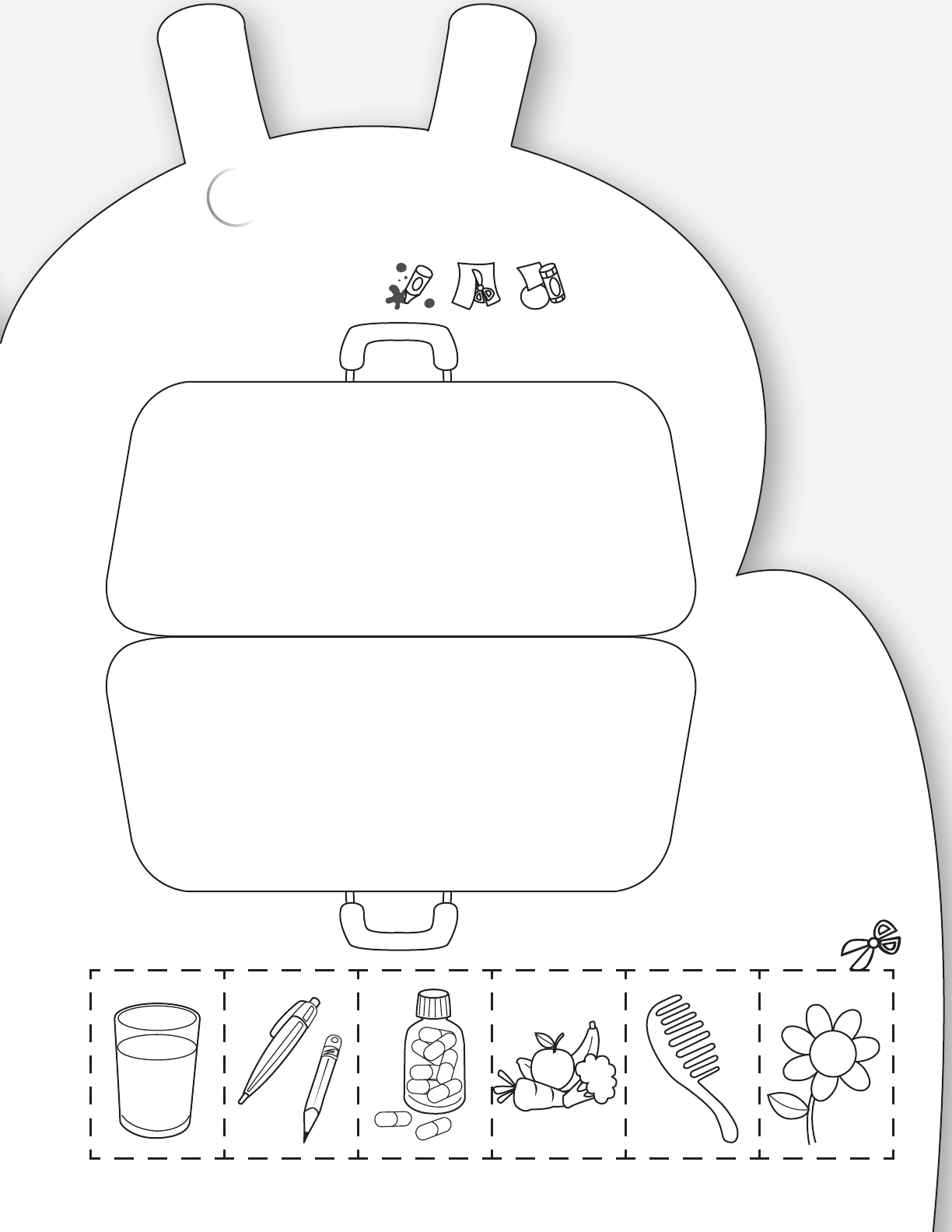
Materials: crayons, scissors, glue stick, Class CD, Story Cards Unit 2
Instructions:
Show students the Story Cards and encourage them to retell the
story. Then help them name and color the pictures. Next, point to the
picture of the doctor’s bag and explain to students that doctors use
it to keep the things they need to help sick people.
Tell students to cut out the pictures. Ask them to pick up the ones
that helped Mr. Frick solve his problems in the story. Tell students to
paste only those pictures into the doctor’s bag. If necessary, play
Track 23 again as you show students the Story Cards. Keep students’
work in their portfolios.
See more pre-reading, while reading and post-reading activities on
the Teacher’s Resource CD. Use them depending on the needs of
your class.
Unit 2
twelve
U
n
i
t
13
P
r
e
-
r
e
a
d
i
n
g
Cut and paste. Write.
3
C
a
s
e
y
’
s
C
a
r
r
o
t
C
a
k
e
thirteen
milkflour
eggscarrots
Ingredients
14
I
n
s
t
r
u
c
t
i
o
n
s
Unit 3
Casey’s Carrot Cake
Pre-reading
Materials: colored pencils, scissors, glue stick, drawings or magazine
pictures of a salad, a milkshake, a cake and an omelet, Class CD,
Story Cards Unit 3
Instructions:
Show Story Card Scene 1 and point to the main character and
introduce her. Say She is Casey the cat. She is going to prepare
something to eat. Point to the list on page 13 and ask What’s this?
Help students answer It is a list of ingredients. Explain to students that
ingredients are the things she needs to prepare the cake. Encourage
students to read the words. Then point to the pictures of the carrots
on page 13 and ask What are these? and have students answer.
Next, tell them to write the corresponding word. Do the same with
the rest of the pictures and words. Finally, have them color, cut out
and paste the pictures of the food next to the corresponding word
on the list. Then ask students What can you make with carrots? Show
the picture of the salad (see Materials) and help them answer We
can make a salad. Do the same with the rest of the ingredients; show
students the pictures of the milkshake, the cake, and the omelet (see
Materials) to help them answer. Finally, say Casey needs carrots, our,
eggs and milk. What is she’s going to make? Have them check their
answers as they listen to the story (Track 37). Keep students’ work in
their portfolios.
While Reading
Materials: Class CD, Story Cards Unit 3, picture of a rst prize medal
Preparation: Display Story Cards Unit 3 on the board.
Instructions:
Play Track 37 again up to Scene 3. Stop the recording and ask What
does Casey want to do with the cake? Show the picture of the medal
(see Materials) and help students answer She wants to win rst prize
at the cake show. Ask Who is going to help Casey? Who is going
to give Casey some carrots? Play the track again and encourage
students to say Robbie the rabbit. He gives her some carrots. Ask
them to go to the front and point to the corresponding character in
the Story Cards. Do the same with the rest of the ingredients and the
characters.
fourteen
U
n
i
t
15
Color and decorate.
P
o
s
t
-
r
e
a
d
i
n
g
C
a
s
e
y
’
s
C
a
r
r
o
t
C
a
k
e
3
fteen
16
I
n
s
t
r
u
c
t
i
o
n
s
Casey’s Carrot Cake
Post-reading
Materials: crayons, scissors, glue stick, glitter, sequins, confetti,
Story Cards Unit 3
Instructions:
Show students the Story Cards and encourage them to retell the
story. Then call their attention to the picture on page 15. Ask them
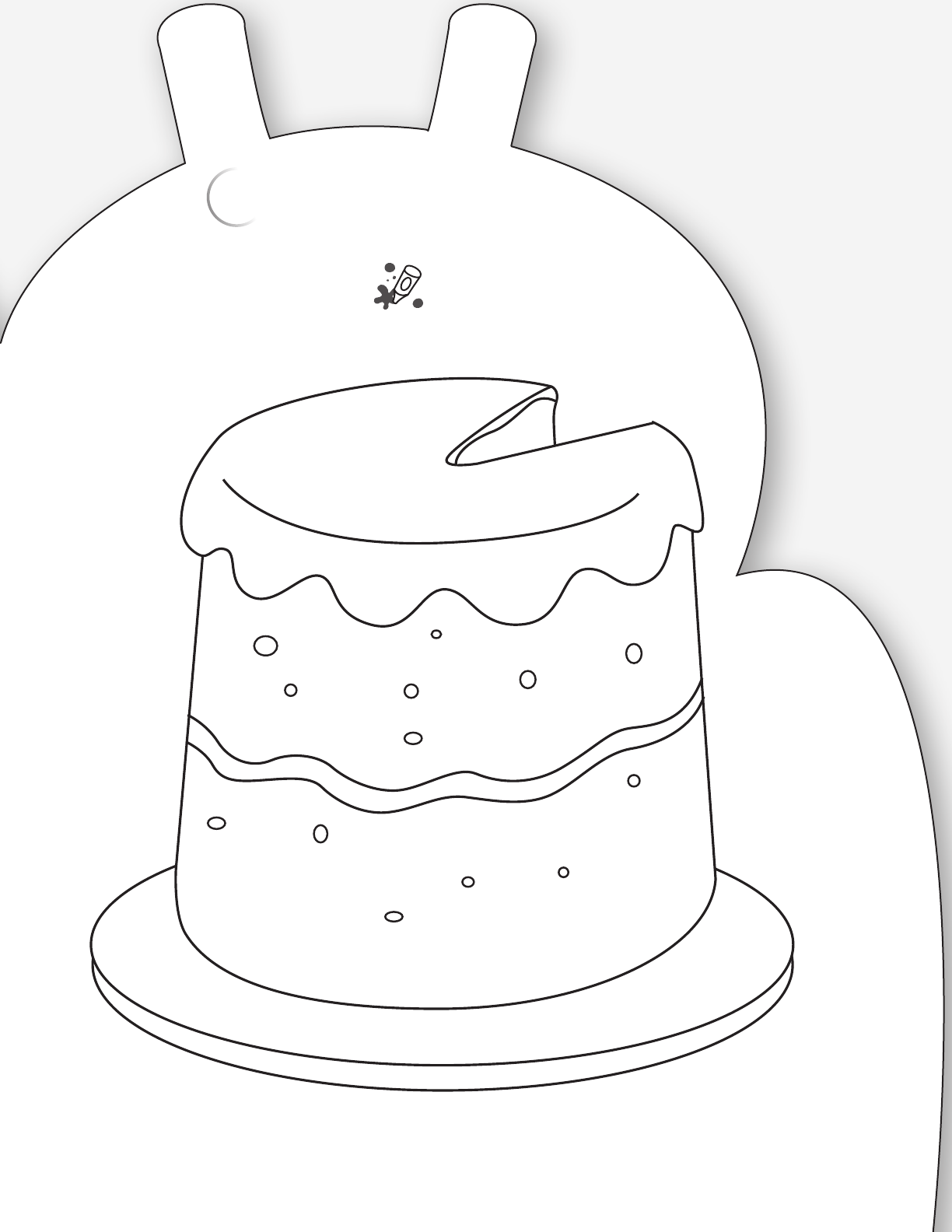
What is this? and help them answer It’s a cake. Tell students to color
their own cake for a cake show. Encourage them to decorate it with
sequins, glitter or confetti. Write Cake Show on the board and display
their nal work on the classroom walls. If possible, invite parents or
other students to the exhibition. Keep students’ work in their portfolios.
See more pre-reading, while reading and post-reading activities on
the Teacher’s Resource CD. Use them depending on the needs of
your class.
Unit 3
sixteen
U
n
i
t
17
P
r
e
-
r
e
a
d
i
n
g
Connect and say.
R
o
b
e
r
t
a
n
d
t
h
e
R
o
b
o
t
4
seventeen
18
I
n
s
t
r
u
c
t
i
o
n
s
Unit 4
Robert and the Robot
Pre-reading
Materials: colored pencils, Class CD
Instructions:
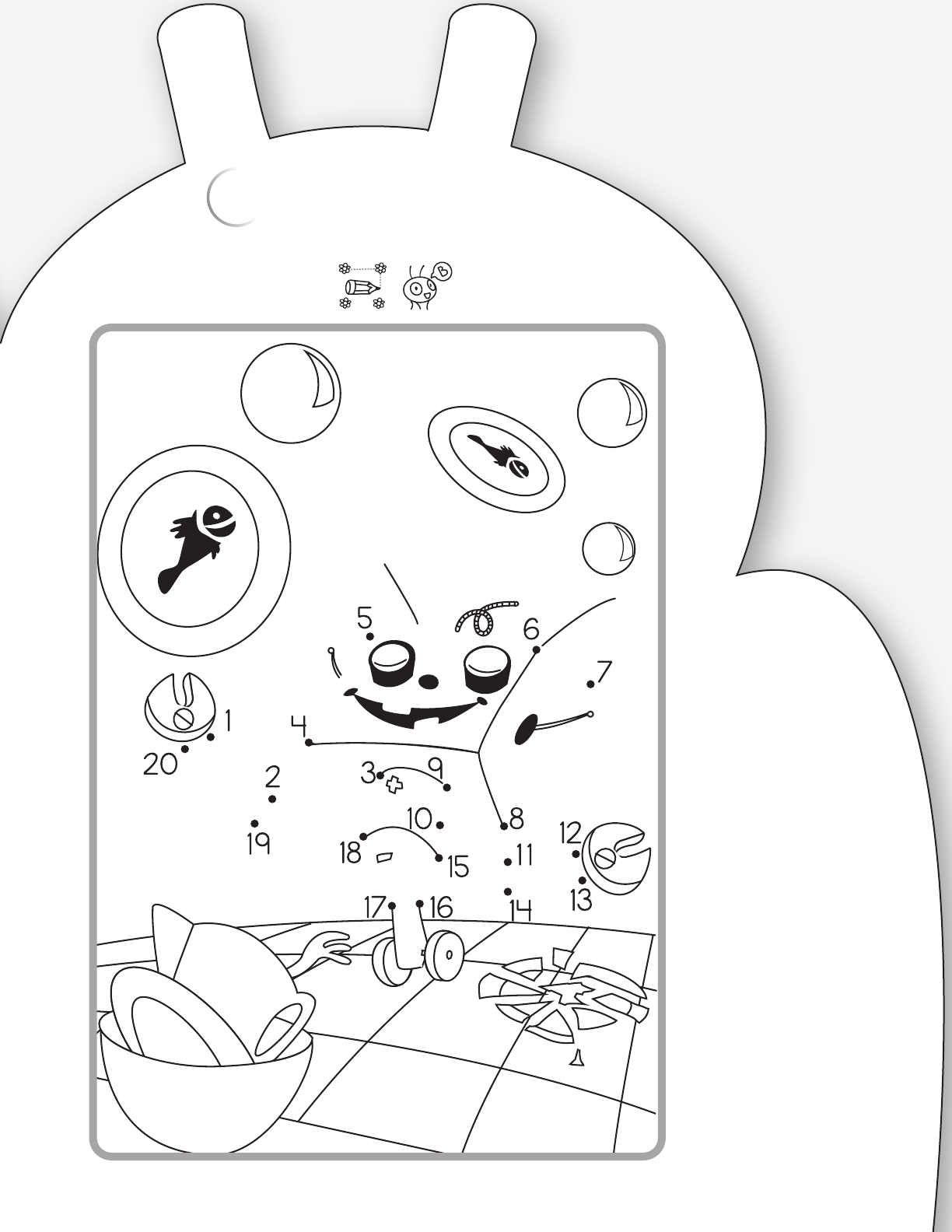
Explain to students they are going to listen to a story about a messy
house. Explain the meaning of messy (something that is not clean
and is lacking order). Show students the scene on page 17 and
say Look, this is a messy kitchen. Then tell students to join the dots
in order to discover the character in the picture. Once they have
nished, say Look, it’s a robot! Have them say Robot. Elicit from
students what they think the robot can do in a messy house. Next,
play Track 50 and have them check their predictions as they listen to
the story. Keep students’ work in their portfolios.
While Reading
Materials: Class CD, Story Cards Unit 4
Preparation: Display Story Cards Unit 4 on the board.
Instructions:
Play Track 50 again. Stop the recording after each scene. Point to
each Story Card and ask students how the characters –Robert, his
family and the robot– feel. Encourage students to say why they think
the characters feel like that. Finally, have them say how they would
feel if they were Robert, Robert’s parents or the robot.
eighteen
U
n
i
t
19
Color and cut. Act out.
P
o
s
t
-
r
e
a
d
i
n
g
4
R
o
b
e
r
t
a
n
d
t
h
e
R
o
b
o
t
nineteen
20
I
n
s
t
r
u
c
t
i
o
n
s
Robert and the Robot
Post-reading
Materials: crayons, glue stick, glitter, cardboard paper, scissors,
elastic bands, Class CD, Story Cards Unit 4
Instructions:
Show students the Story Cards and encourage them to retell the
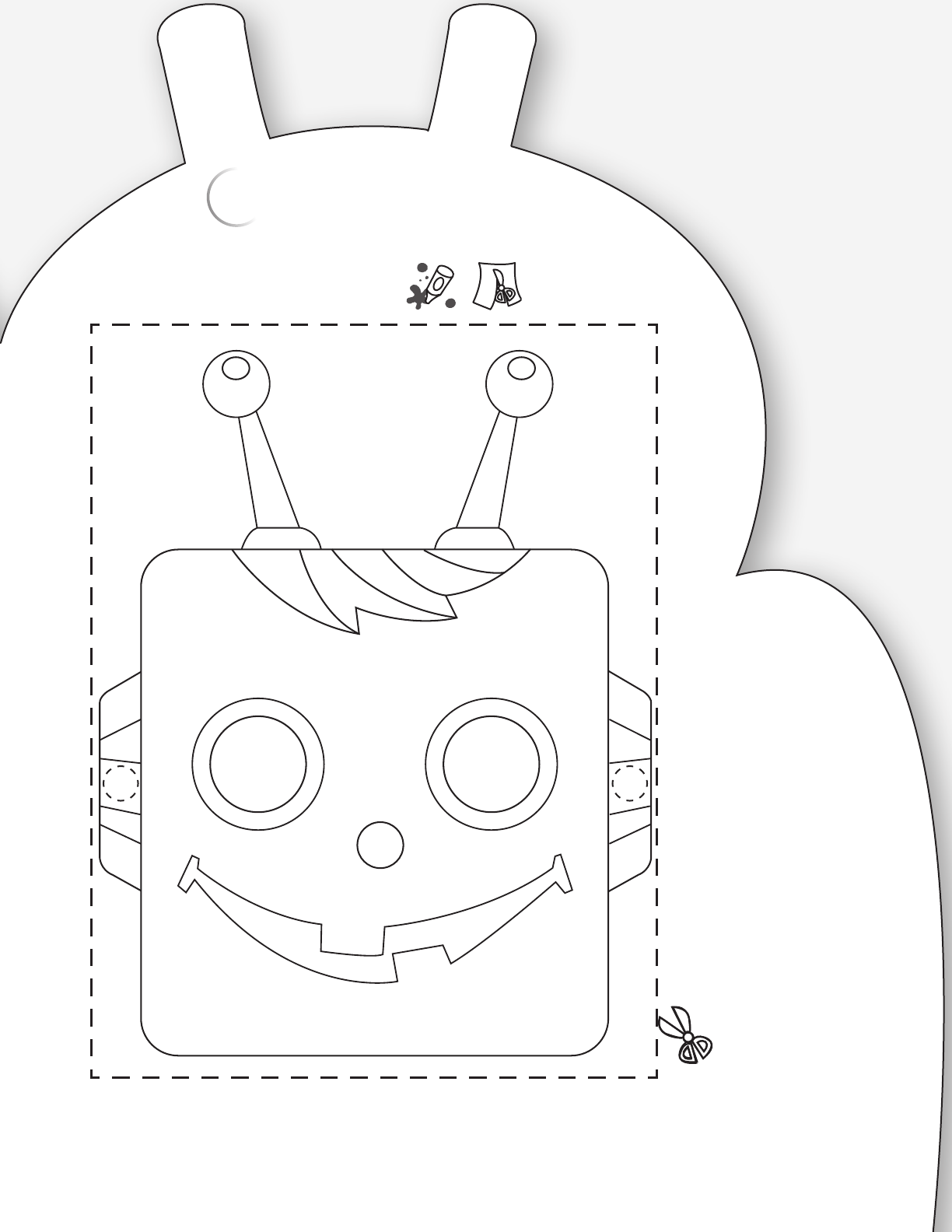
story. Then draw their attention to the picture on page 19. Ask them
What is this? and help them reply It is a robot. Say Yes, this is a robot
mask. Tell students to color the mask and decorate it with glitter. Ask
them to cut out the mask, glue it onto cardboard paper and then
cut it out again. Help them cut out the eyes and insert the elastic
band to hold the mask in place. Finally, ask students to wear their
masks and play Simon Says. Give commands such as Simon Says
set the table, wash the dishes, make the bed, put away the toys, take
out the garbage and collect the leaves. Encourage students to act
out the actions moving like robots. If necessary, play Track 50 again
as you show students the Story Cards. Keep students’ work in their
portfolios.
See more pre-reading, while reading and post-reading activities on
the Teacher’s Resource CD. Use them depending on the needs of
your class.
Unit 4
twenty
U
n
i
t
21
P
r
e
-
r
e
a
d
i
n
g
5
Read and look. Circle.
W
h
a
t
D
i
d
t
h
e
D
i
n
o
s
a
u
r
D
o
?
twenty-one
Yes No
Yes No
Did the dinosaur go to
the movies?
Did the dinosaur go to
ballet class?
22
I
n
s
t
r
u
c
t
i
o
n
s
What Did the Dinosaur Do?
Pre-reading
Materials: colored pencils, Class CD
Instructions:
Explain to students they are going to listen to a story about two
dinosaurs and the things they did on the weekend. Encourage
students to say which are the weekend days (Saturday and
Sunday). Show them the pictures on page 21 and say Look at the
boy dinosaur. This is what he did on the weekend. Did he go to the
movies? Have students read the question, as they point to each
word. Then tell them to look at the picture and circle Yes or No,
according to what they see. Do the same with the picture of the girl
dinosaur. Next, play Track 62 and have them check their answers as
they listen to the story. Keep students’ work in their portfolios.
While Reading
Materials: Story Cards Unit 5, Class CD
Preparation: Display Story Cards Unit 5 on the board.
Instructions:
Play Track 62. Have students follow the story in their Student’s Books.
Play the track again and encourage several students to answer
the questions they hear in the story saying Yes, he did. / Yes, she
did. No, he didn’t. / No, she didn’t. Encourage them to point to the
corresponding pictures in the Story Cards and in their Student’s Book.
Next, play Track 62 again and have students clap when they hear
words that rhyme, like Saturday-way, Crooze-bruise, Sunday-way.
Unit 5
twenty-two
U
n
i
t
23
Write and draw. Say.
P
o
s
t
-
r
e
a
d
i
n
g
W
h
a
t
D
i
d
t
h
e
D
i
n
o
s
a
u
r
D
o
?
5
twenty-three
Saturday
Sunday
24
I
n
s
t
r
u
c
t
i
o
n

s
Unit 5
What Did the Dinosaur Do?
Post-reading
Materials: crayons, Story Cards Unit 5
Instructions:
Show students the Story Cards and encourage them to retell the
story. Then tell them I went to the movies on Saturday. I went to the
supermarket on Sunday. What did you do on the weekend? Elicit
answers from different students. Next, ask the whole group to write
the words on page 23. Help them read both words and ask them to
draw what they did on Saturday and Sunday in the corresponding
spaces. Next, have them work in pairs. Encourage them to show their
drawings to their partner and ask What did you do on the weekend?
Monitor the activity and help students answer. Keep students’ work in
their portfolios.
See more pre-reading, while reading and post-reading activities on
the Teacher’s Resource CD. Use them depending on the needs of
your class.
twenty-four
U
n
i
t
25
P
r
e
-
r
e
a
d
i
n
g
Read. Cut and paste.
W
h
a
t
A
n
i
m
a
l
C
a
n
I
B
e
?
6
twenty-five
long neck
and hoofs
big mouth
and tail
claws and
paws
tail and
pouch
26
I
n
s
t
r
u
c
t
i
o
n
s
What Animal Can I Be?
Pre-reading
Materials: colored pencils, scissors, glue stick, Class CD
Instructions:
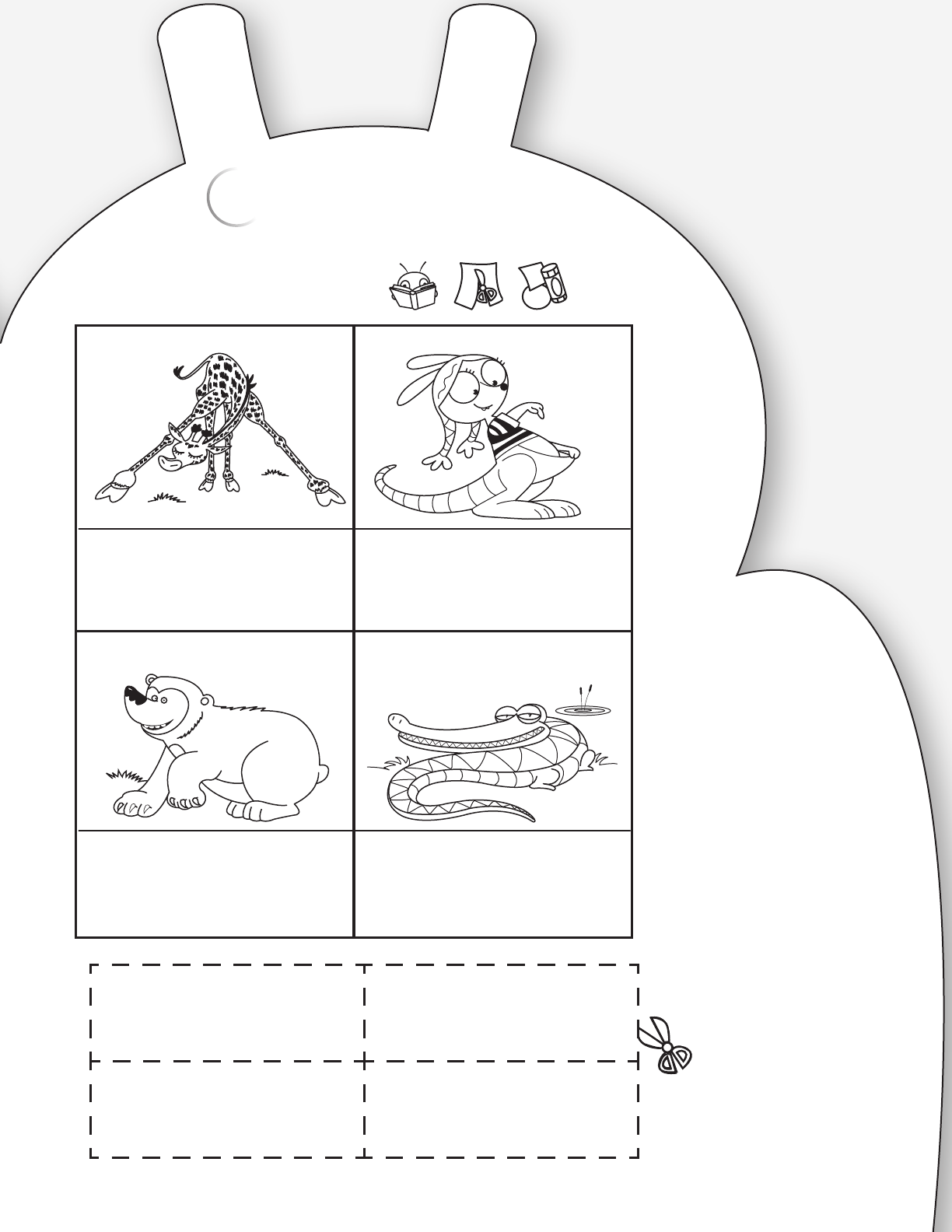
Draw students’ attention to the pictures. Point to each picture and
encourage them to name the animals. Have them color the pictures.
Then help students read the words on the labels and cut them
out. Help them read the characteristics, and ask them to look at
the pictures and hold up the label with the characteristics of each
animal. Next, tell them to paste the labels in the space below the
corresponding picture. Elicit from students the characteristics these
animals have in common; for example, which animals have fur or
a tail, etc. Finally, play Track 75 and have students check what the
animals have in common as they listen to the story. Keep students’
work in their portfolios.
While Reading
Materials: Class CD, Story Cards Unit 6
Instructions:
Play Track 75. Have students follow the story in their Student’s Books.
Hold up Story Card Scene 1, point to the kangaroo and say Karen
doesn’t want to be a kangaroo. She thinks its… Let students nish the
sentence saying Boring. Hold up Story Card Scene 2 and say Karen
goes to the zoo. She wants to see the other animals and be like one
of them. What animals does she visit? Help students answer.
Show the Story Cards with the bear and the giraffe and ask Does
Karen want to be like the bear? Does she want to be like the giraffe?
Help them answer.
Unit 6
twenty-six
U
n
i
t
Color and make. Say.
P
o
s
t
-
r
e
a
d
i
n
g
6
W
h
a
t
A
n
i
m
a
l
C
a
n
I
B
e
?
twenty-seven
27
paste here
paste here
paste here
paste here
28
I
n
s
t
r
u
c
t
i
o
n
s
Unit 6
What Animal Can I Be?
Post-reading
Materials: crayons, scissors, glue stick, Story Cards Unit 6
Instructions:
Show students the Story Cards and encourage them to retell the
story. Then point to the pictures of the characters and say Karen
doesn’t want to be a kangaroo. Does she want to be a bear?
Does she want to be a giraffe? Does she want to be a crocodile?
Encourage students to answer No, she doesn’t want to have paws
and big claws. No, she doesn’t want to have a long neck, long legs,
and hoofs. No, she doesn’t want to have a big mouth and short legs.
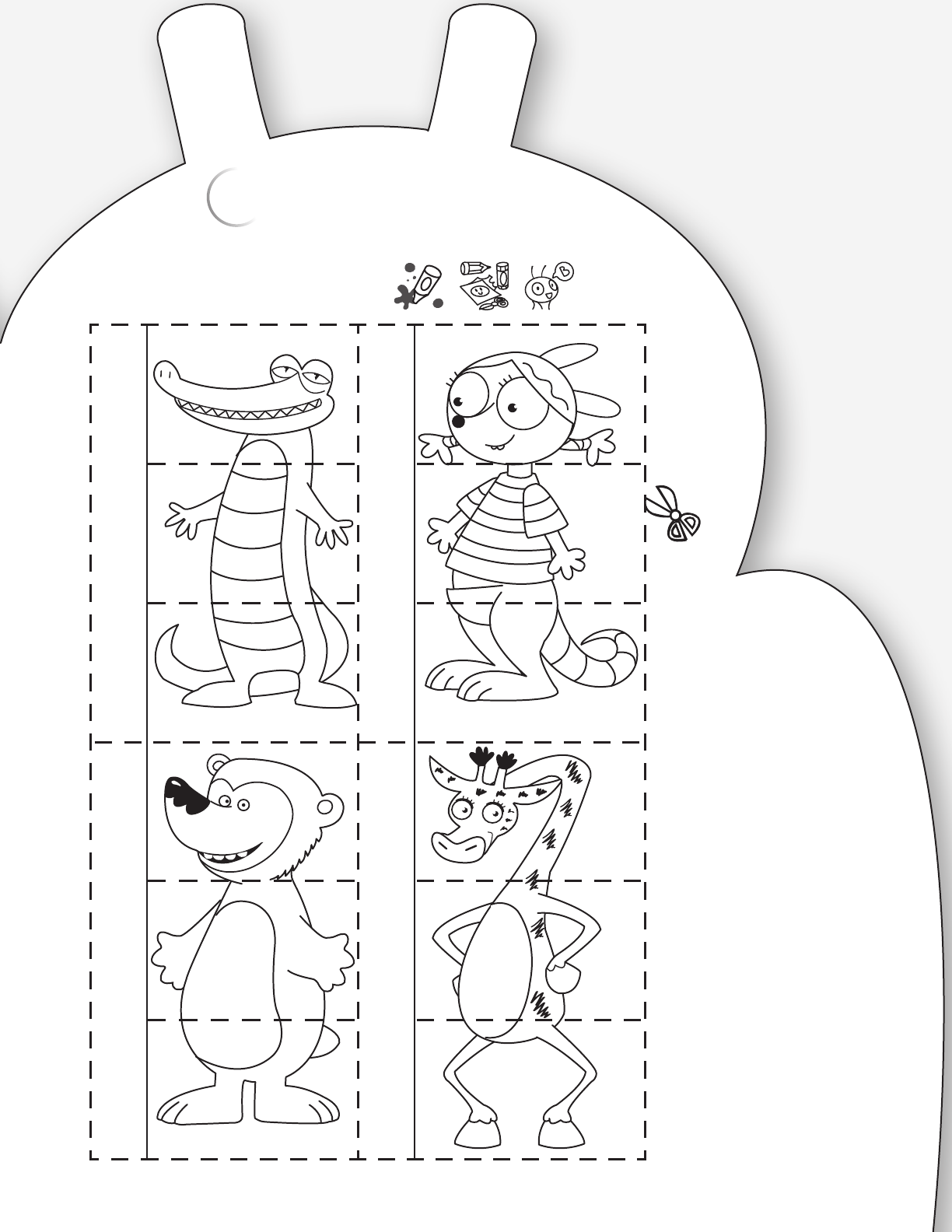
Next, have them color the pictures. Help them cut out the pieces
and paste the pieces carefully to make a booklet. Then tell students
to lift the pieces in random order to make different combinations of
animals’ body parts. Encourage them to describe each combination;
for example It’s a bear, with hoofs and short legs. Finally, have
students show you the body Karen the kangaroo is happy with,
according to the story. If necessary, play Track 75 again as you show
students the Story Cards. Keep students’ work in their portfolios.
See more pre-reading, while reading and post-reading activities on
the Teacher’s Resource CD. Use them depending on the needs of
your class.
twenty-eight
U
n
i
t
29
P
r
e
-
r
e
a
d
i
n
g
Write and match.
7
T
i
d
y
T
o
w
n
’
s
T
h
i
e
f
twenty-nine
f
iref
ighter
waiter
lifeguard
police of
f
icer
dog
30
I
n
s
t
r
u
c
t
i
o
n
s
Unit 7
Tidy Town’s Thief
Pre-reading
Materials: colored pencils, Class CD
Instructions:
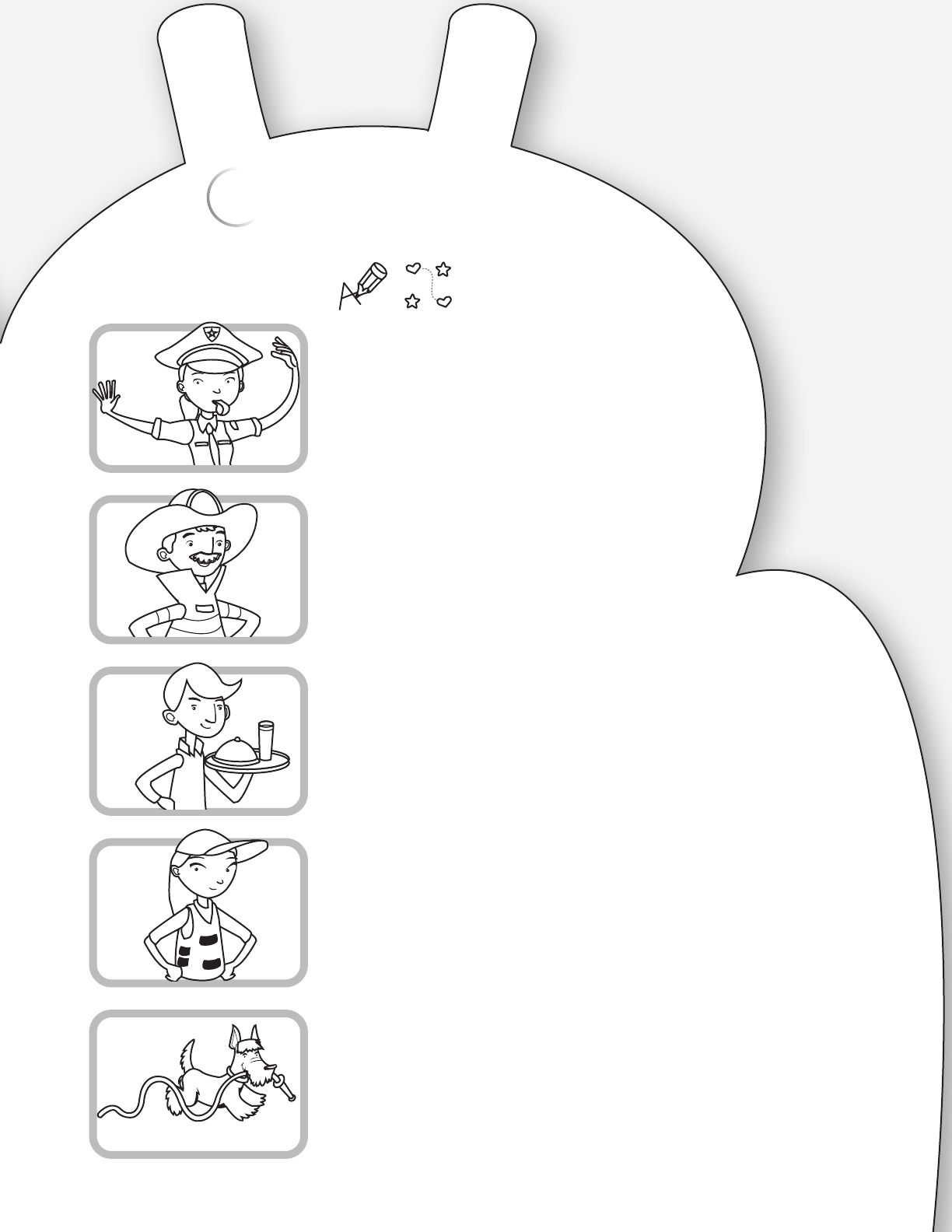
Draw students’ attention to the pictures. Point to each picture and
encourage them to identify the professions and the animal. Then
encourage students to read and write the words. Ask them to trace
a line to match the picture with the corresponding word. Next, say
an action and have students say the profession it is related to. Say
Direct trafc, Put out re, Serve food and Rescue people. Encourage
students to say Police ofcer, Fireghter, Waiter and Lifeguard,
respectively, and point to the corresponding words on page 27.
Point to the hose and say What is it? Have students reply A hose.
Explain what a thief is and ask students what they think the dog is
doing with the hose. Finally, play Track 86 and have them check their
predictions. Keep students’ work in their portfolios.
While Reading
Materials: Class CD, Story Cards Unit 7
Preparation: Display the Story Cards, in disorder, on the board.
Instructions:
Play Track 86. Have students follow the story in their Student’s Books.
Then show Story Card Scene 1 and say First the reghter and the
police ofcer go after the dog. Who’s next? Encourage different
students to go to the front and choose the Story Card that shows the
next scene (the waiter, the reghter and the police ofcer after the
dog). Do the same with the rest of the scenes. If necessary, play the
track again to help students answer.
thirty
U
n
i
t
31
7
Look and circle.
P
o
s
t
-
r
e
a
d
i
n
g
T
i
d
y
T
o
w
n
’
s
T
h
i
e
f
thirty-one
Yes No
Yes No
Don’t do it again!
Don’t do it again!
32
I
n
s
t
r
u
c
t
i
o
n
s
Tidy Town’s Thief
Post-reading
Materials: colored pencils, Class CD, Story Cards Unit 7
Instructions:
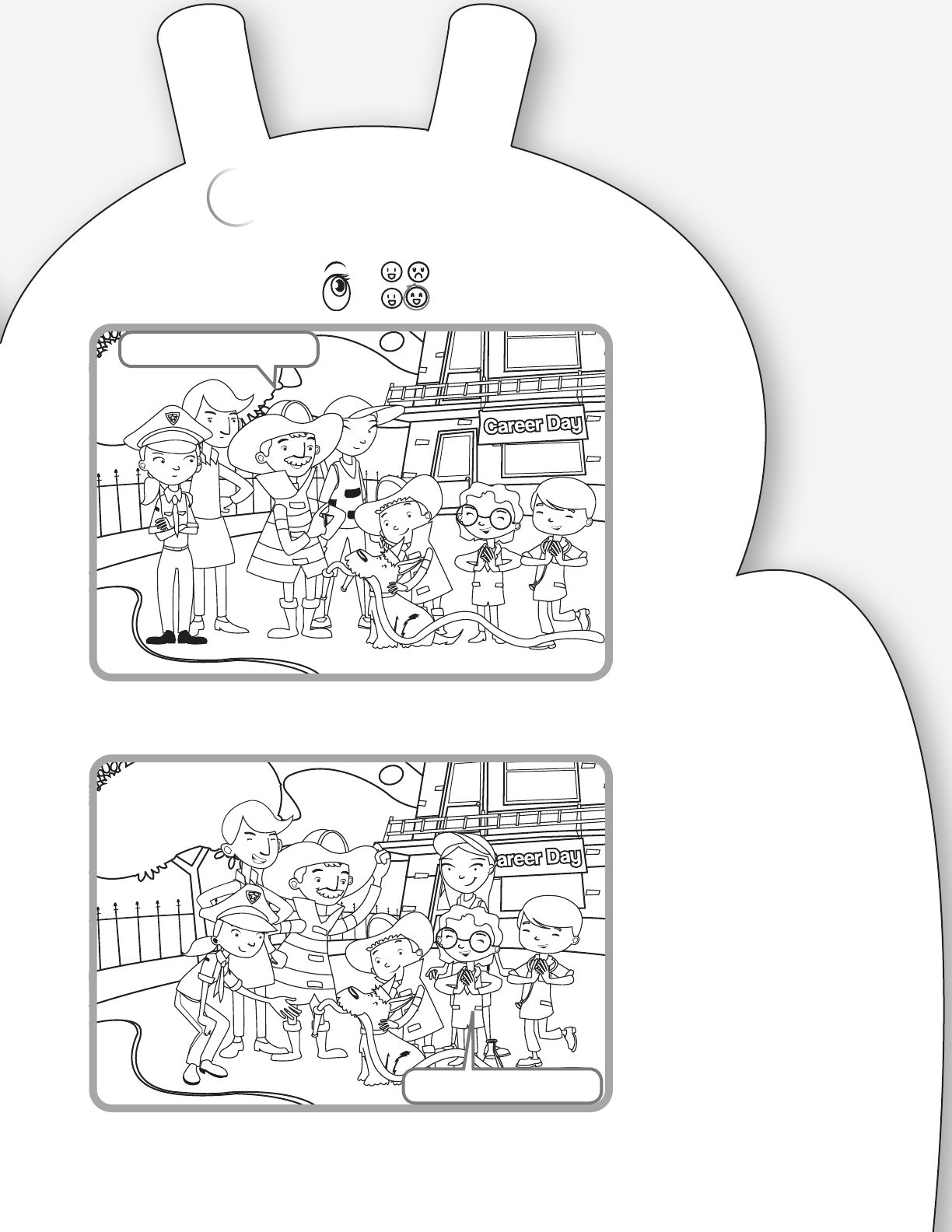
Show students the Story Cards and encourage them to retell the
story. Then point to the pictures on page 31 and have students say
which story they come from. Help them identify the characters and
ask them to circle Yes if the scene shows what happened at the end
of the story or No if it does not. Encourage students to justify their
answer. For example, help them see that the rst scene is not in the
story, as it is a girl, and not the police ofcer, who says “Don’t do it
again.” Play Track 86 again as you show students the Story Cards to
help them check their choice. Keep students’ work in their portfolios.
See more pre-reading, while reading and post-reading activities on
the Teacher’s Resource CD. Use them depending on the needs of
your class.
Unit 7
thirty-two
U
n
i
t
33
P
r
e
-
r
e
a
d
i
n
g
M
a
r
v
i
n
’
s
T
r
e
e
Cut and paste. Color.
8
thirty-three
34
I
n
s
t
r
u
c
t
i
o
n
s
Marvin’s Tree
Pre-reading
Materials: colored pencils, scissors, glue stick, Class CD
Instructions:
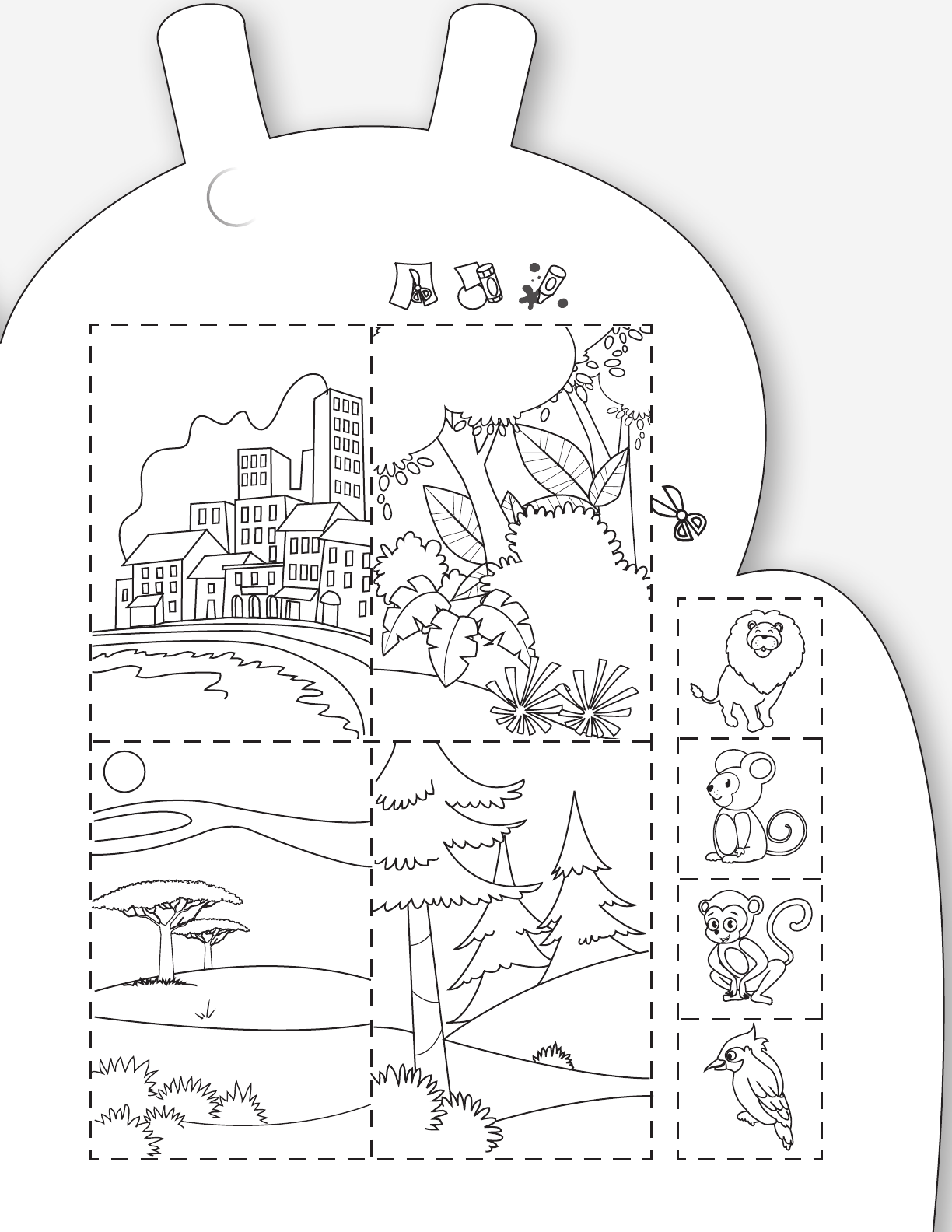
Draw students’ attention to the pictures. Point to each picture and
encourage them to identify the places and the animals. Then ask
students Who lives in the jungle? Who lives in the savannah?, etc.
Encourage students to answer naming any of the animals in the
pictures. Next, have them cut out the pictures of the animals and
paste them in the correct habitat. Tell students to color the pictures.
Once students have nished, encourage them to say A rat lives in
the city. A monkey lives in the jungle, etc. Next, say This is a story
about a monkey. He goes to the city, to the savannah and to the
forest. Do you think he’s happy or sad? Elicit opinions from students.
Finally, play Track 96 and have them check their predictions. Keep
students’ work in their portfolios.
While Reading
Materials: Class CD, Story Cards Unit 8
Preparation: Display the Story Cards on the board.
Instructions:
Play Track 96. Have students follow the story in their Student’s Books.
Then show the Story Cards, one by one, and ask and answer
comprehension questions. For example, show Story Card Scene
1; point to the monkey and say What’s his name? Where does he
live? (Pointing to the truck) What’s this? Encourage students to
answer. Show Story Card Scene 2 and ask Where’s Marvin? Who
lives in the city? Does Marvin eat garbage? Do the same with the
rest of the scenes. If necessary, play the track again to help students
answer.
Unit 8
thirty-four
U
n
i
t
35
Trace and draw. Say.
P
o
s
t
-
r
e
a
d
i
n
g
M
a
r
v
i
n
’
s
T
r
e
e
8
thirty-five
rat
lion
monkey
bird
Me
36
I
n
s
t
r
u
c
t
i
o
n
s
Marvin’s Tree
Post-reading
Materials: colored pencils, Story Cards Unit 8
Instructions:
Show students the Story Cards and encourage them to retell the
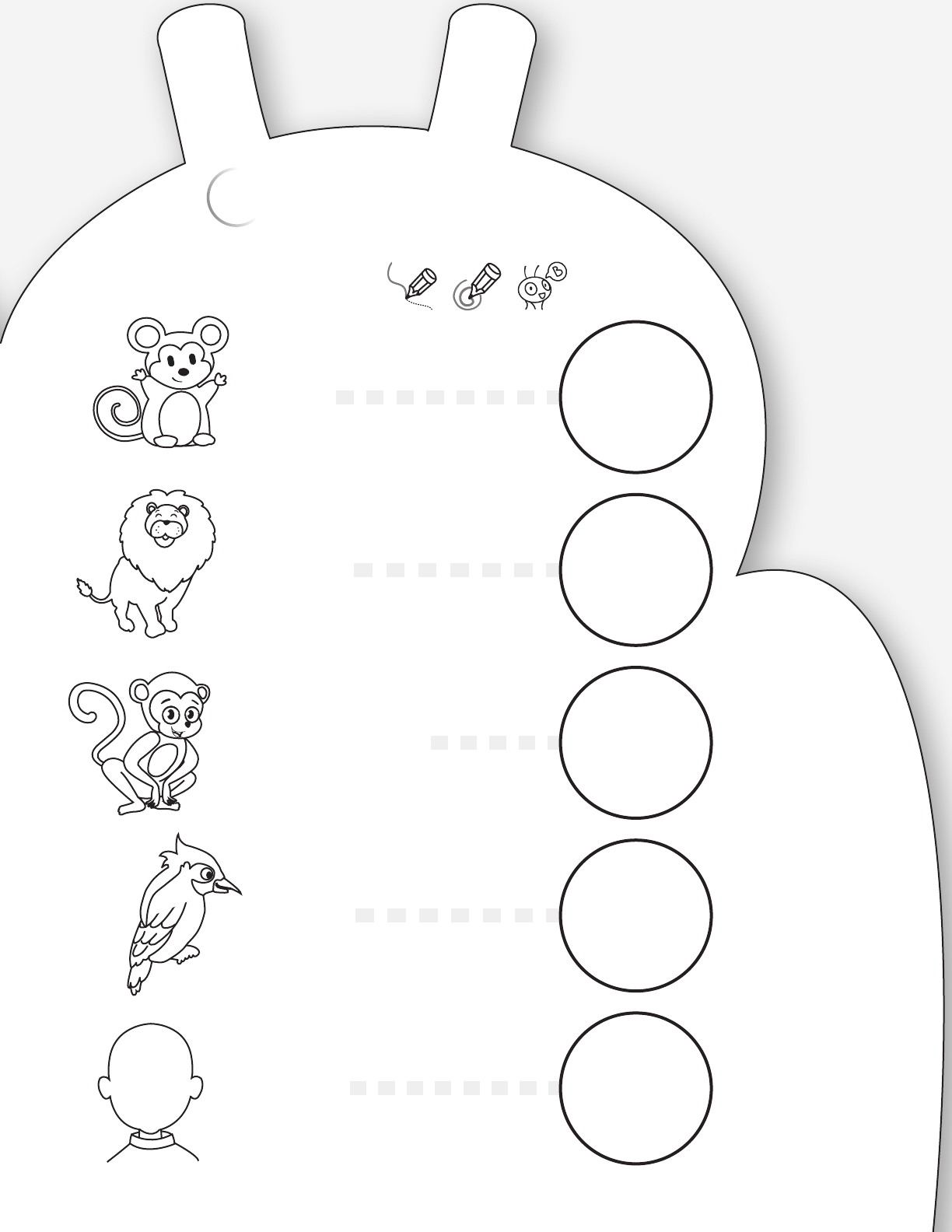
story. Then point to the pictures on page 35 and have students
say which story they come from. Encourage them to say the title of
the story. Help them identify the characters and elicit what every
character likes to eat, according to the story. Then have them trace
over the line from the character to the blank circle. Encourage
students to draw the corresponding food. Ask them to justify their
choice. For example, help them point to the story scenes where each
character says what they eat. Finally, have them draw themselves
in the picture on the left and draw what they like to eat in the circle.
Encourage them to say I like… Keep students’ work in their portfolios.
See more pre-reading, while reading and post-reading activities on
the Teacher’s Resource CD. Use them depending on the needs of
your class.
Unit 8
thirty-six
Components
• Student's Book
• Practice Book
• Student's CD
• Cricket Tales
• Teacher's Guide
• Teacher's Resource CD
• Class CD
• Story Cards
• Flashcards
• Classroom Language Flashcards
3